Disclosure: Greatful Moments received information from La Joya Jewelry about the growing interest in champagne and warmer-toned diamonds. The jewelry expertise featured in this article is attributed to Nishit Mehta, founder of La Joya Jewelry and a third-generation diamond expert. Trend information is also based on recent reporting from Vogue and gemological information from the Gemological Institute of America (GIA).
For years, the classic engagement ring has often meant one thing: a bright, colorless diamond in a traditional setting.
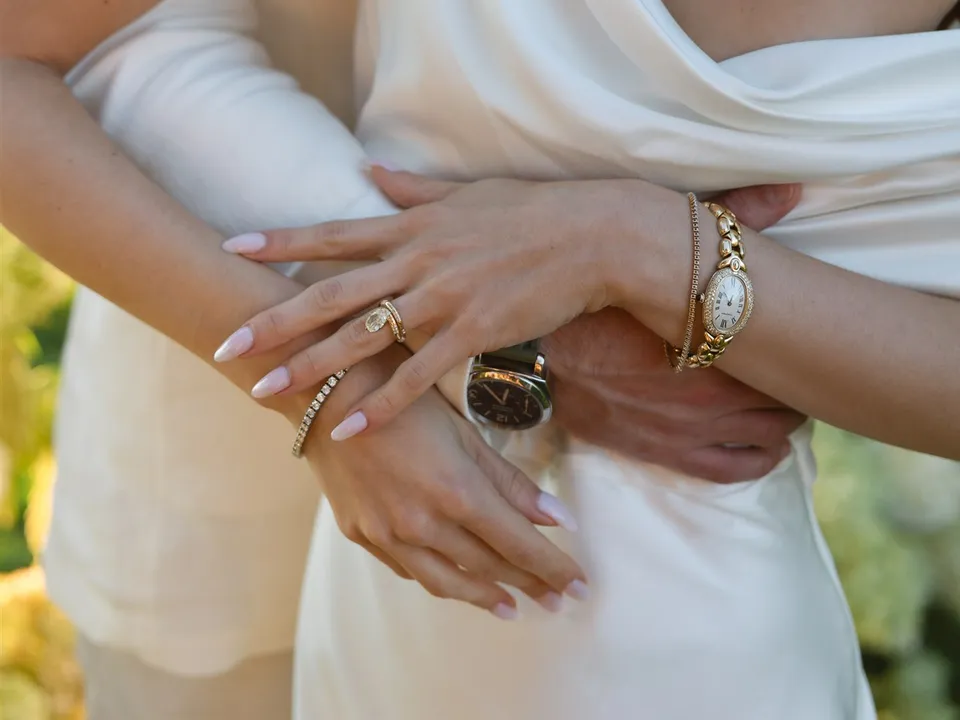
That look isn’t going anywhere, but there is another diamond trend getting attention—warmer stones with champagne, yellow, brown and golden undertones.
Vogue recently called champagne diamonds the next “cool-girl” engagement ring trend, reporting that warmer diamonds are gaining attention as brides look for rings with more individuality and character. The trend fits into a larger movement toward antique-inspired stones, yellow gold and engagement rings that feel less standardized.
For couples who don’t necessarily want their engagement ring to look like everyone else’s, that warmth may be part of the appeal.
What Is a Champagne Diamond?
“Champagne diamond” is generally used as a descriptive jewelry term for diamonds with warm tones. Depending on the individual stone, those tones can range from soft yellow and golden shades to brownish or pinkish hues.
The appearance of a diamond can vary considerably, so two stones described as champagne may not look identical.
That is one reason the trend is less about finding one specific “champagne” color and more about finding a stone whose particular character appeals to the person wearing it.
Warmth Doesn’t Automatically Mean a Bad Diamond
The word “warm” can sometimes make shoppers think they’re looking at a diamond that is somehow lesser than a colorless stone. But diamond color is more complicated than simply “white is good and color is bad.”
GIA explains that diamonds in the traditional D-to-Z range generally decrease in value as color becomes more apparent, while fancy-color diamonds are evaluated differently, with color strength and purity playing an important role.
That distinction matters when talking about warmer diamonds.
A person choosing a champagne-toned stone may actually be looking for the color rather than trying to avoid it.
And that is part of what makes the current trend interesting: the characteristic that once might have been considered something to minimize can now be part of the look someone specifically wants.
Cut Can Change How a Diamond Looks
The diamond’s cut and shape can have a major effect on how its color and sparkle appear.
GIA notes that colored diamonds are generally cut with attention to displaying their color, while the proportions and shape of a diamond also affect how it looks to the eye.
That makes the choice of shape more than simply a matter of following the latest trend.
An elongated diamond, an antique cushion, an oval or another distinctive shape can give a ring an entirely different personality.
Recent Vogue bridal coverage has highlighted elongated shapes—including ovals, marquise cuts and elongated antique cushions—as part of the broader 2026 engagement-ring movement.
Why Yellow Gold Works So Well With Warm Stones
Warm diamonds and yellow gold naturally create a coordinated color palette.
GIA’s diamond-buying guidance notes that the metal surrounding a diamond can influence how its color is perceived. Yellow or rose gold can make a warmer diamond feel more harmonious with its setting, while a white-metal setting can create more contrast.
That helps explain why the champagne-diamond trend is appearing alongside the renewed popularity of yellow-gold engagement rings.
Instead of trying to make the diamond look as white as possible, the setting can embrace the warmth.
The result can feel vintage, romantic and intentionally different.
The Return of Character
The champagne-diamond conversation is part of a bigger change happening in engagement jewelry.
Vogue has reported growing interest in antique diamonds, Old Mine and Old European cuts, elongated cushions, chunky gold bands and settings that feel more personal and less mass-produced.
That doesn’t mean every bride is abandoning the traditional round brilliant diamond.
It means there are more people willing to say, “I want something that feels like me.”
For some, that might mean an antique diamond. For another person, it could mean a champagne stone. Someone else might choose a classic white diamond but put it in an unusual setting.
There isn’t one right way to choose an engagement ring.
What About Lab-Grown Diamonds?
The warmer look isn’t limited to natural diamonds.
Lab-grown diamonds have expanded the number of choices available to consumers, including stones with different color appearances. However, shoppers should still look at the individual stone and its documentation rather than assuming that every lab-grown or champagne-colored diamond will look the same.
The important question is what you’re actually buying, how its color was produced or classified, and whether the appearance is what you want.
What Should You Look For?
If you’re considering a champagne or warmer-toned engagement diamond, don’t choose based solely on the name of the color.
Instead, look closely at the individual stone.
Consider:
- The color: Do you prefer a soft champagne, golden, yellow or brown tone?
- The cut: How does the stone look when it moves in different lighting?
- The shape: Would an oval, marquise, cushion or antique-inspired shape fit your style?
- The setting: Does yellow gold enhance the warmth you’re looking for?
- The grading information: Understand what the diamond’s report actually says about the stone.
- Your own reaction: Most importantly, do you love looking at it?
GIA recommends evaluating a diamond under different lighting conditions because lighting can significantly change how a diamond’s appearance is perceived.
A Warmer Ring Can Still Be a Classic
Trends come and go, but an engagement ring is ultimately something a couple will hopefully live with for many years.
That makes personal preference more important than simply choosing whatever happens to be popular.
Champagne diamonds are getting attention because they offer something different: warmth, character and a look that can work beautifully with antique-inspired designs and yellow gold.
For some couples, that may be exactly what they have been searching for.
Nishit Mehta, founder of La Joya Jewelry and a third-generation diamond expert, brings that jewelry-industry perspective to the conversation. La Joya Jewelry can provide additional expert insight into why champagne and warmer stones are gaining traction, how cut and setting affect their appearance, the distinction between intentional warmth and undesirable color, and how elongated shapes and yellow gold can complement these stones.
Whether champagne diamonds become a lasting bridal staple or remain one chapter in the ever-changing story of engagement-ring fashion, the trend points to something bigger: today’s couples have more ways to choose a ring that reflects their own story.
And sometimes, a little warmth is exactly what makes a diamond feel personal.
Source & Credit
Expert Source: Nishit Mehta, founder of La Joya Jewelry and third-generation diamond expert. Expert information supplied to Greatful Moments by La Joya Jewelry.
Trend Source: Vogue, “Champagne Diamonds Are the Next Cool-Girl Engagement Ring Trend,” 2026.
Additional Trend Reporting: Vogue, “The Engagement Rings You’ll See on the Chicest Brides-to-Be in 2026,” and “How to Buy an Antique Engagement Ring, Like Devon Lee Carlson and Taylor Swift.”
Gemological Source: Gemological Institute of America (GIA), information on fancy-color diamonds, diamond cut and diamond quality factors.
Photo Credit: No photograph was included with the pitch provided to Greatful Moments. Use an approved La Joya Jewelry image and its supplied photo credit if one is provided separately.