Affiliate Disclosure: This post may contain affiliate links. If you make a purchase through one of my links, I may receive a small commission at no additional cost to you.
There is something about water that makes summertime feel like summertime. Swimming pools, lakes, beaches, waterparks, vacations and those afternoons when the kids come inside looking like wrinkled raisins because nobody could convince them it was time to get out of the pool.
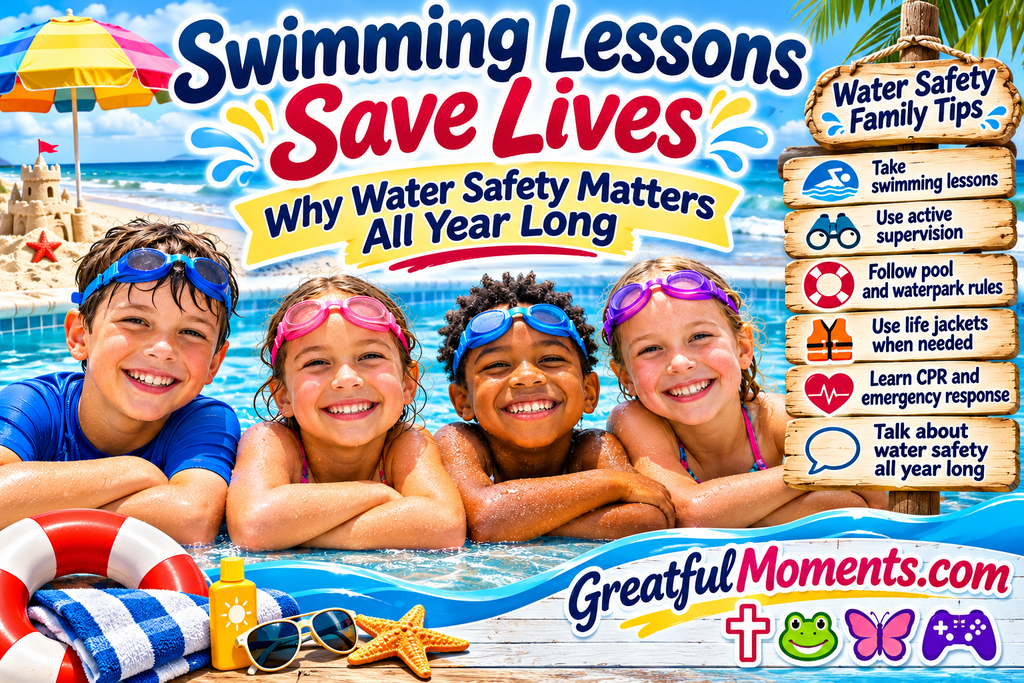
But there is another side of water that we parents can’t afford to forget. Water safety matters. And swimming lessons can save lives. I was recently reminded of just how important this is when I learned about the 17th Annual World’s Largest Swimming Lesson™, a worldwide event created to bring communities together to teach children important water safety and swimming skills.
This year’s event brought together tens of thousands of children across communities around the world, with participating locations in 25 countries and activities taking place across six continents. That’s a whole lot of children learning something that could one day make a life-or-death difference.
When we think about swimming lessons, we might picture a child learning how to kick, float or make it from one side of the pool to the other. Those skills are important, but water safety is about so much more. Children need to understand how to be safe around water, how to respond if they accidentally fall into water and why listening to parents, lifeguards and swimming instructors matters.
The World’s Largest Swimming Lesson reinforces the message that swimming lessons are an important part of drowning prevention. And I think that’s something worth remembering long after summer vacation is over. Here’s something I think is easy for families to forget. Just because the calendar says fall doesn’t mean water suddenly disappears.
Families visit indoor swimming pools. We travel. Hotels have pools. Waterparks stay open in various parts of the country. Some families live near lakes, rivers or other bodies of water. And before we know it, we’re making plans for spring break and summer all over again.
That’s why water safety needs to become an everyday family conversation rather than something we remember when the temperatures start climbing. If your child isn’t comfortable in the water, consider looking into age-appropriate swimming lessons. If your child already knows how to swim, continue reinforcing safe habits. And if your family spends time around water, make sure everyone understands the rules before the fun begins.
The World’s Largest Swimming Lesson was founded by the World Waterpark Association as a global drowning-prevention initiative. Since 2010, the annual event has brought together hundreds of thousands of participants in more than 60 countries. This year’s event included some pretty impressive numbers.
At Disney’s Typhoon Lagoon Water Park in Florida, more than 600 children from five local nonprofit organizations participated. In Uganda, the Life Saving Association of Uganda partnered with Swim Global Project for the first time, introducing more than 620 children to foundational water-safety skills.
And the largest single lesson took place at Dollywood’s Splash Country Water Park in Pigeon Forge, Tennessee, where 1,442 children and families participated. That is a whole lot of people learning skills that could potentially follow them far beyond one day at a waterpark.
One of the things that stood out to me from the event was the idea of a child gaining confidence in the water. Learning to swim isn’t always easy. Some children jump right in and seem like little fish from day one. Others need more time, more encouragement and a whole lot more patience.
And that’s okay. The goal isn’t to turn every child into an Olympic swimmer. The goal is to help children become safer and more comfortable around water while learning skills they can continue building upon. Sometimes that first little bit of confidence is the biggest accomplishment of all.
Swimming lessons are important, but they aren’t a substitute for supervision. That’s something I want to make especially clear. A child knowing how to swim doesn’t mean Mom and Dad can stop paying attention. Water safety works best when families use multiple layers of protection.
That can include:
- Age-appropriate swimming lessons
- Active adult supervision
- Following posted pool and waterpark rules
- Listening to lifeguards
- Teaching children not to run around pools
- Using appropriate life jackets and flotation equipment when needed
- Teaching children what to do if someone gets into trouble in the water
- Learning CPR and basic emergency response
- Talking about water safety before heading to the pool, lake or beach
It may feel like we’re repeating ourselves sometimes. But when it comes to keeping our children safe, I’ll gladly be the mom who repeats herself. I don’t think water safety should be treated as something children need to learn while Mom and Dad stand on the sidelines. It’s something the whole family should understand.
Older children and teenagers need to know how to make smart decisions around water, too. Young adults should understand the dangers of swimming alone or combining swimming with alcohol. Parents should know where the safety equipment is and understand the rules of whatever body of water they’re visiting. And grandparents, babysitters and other caregivers should know the family’s water-safety expectations. The more people who know what to do, the better.
The World’s Largest Swimming Lesson may happen once a year, but the message behind it shouldn’t. Swimming Lessons Save Lives. That’s a message worth putting on the calendar, talking about around the dinner table and remembering every time our families are near water.
Whether your child is just learning to put their face in the water or is already swimming laps, continuing to build those skills is worthwhile. And parents, please don’t wait until the next family vacation to discover that your child needs swimming lessons.
Start now. Keep practicing. Keep talking. Keep supervising. Because a fun day around the water should end with everyone coming home safely. And that’s something worth being Grateful, Thankful, and Blessed for. The World’s Largest Swimming Lesson is a global drowning-prevention initiative founded by the World Waterpark Association. Families and aquatic facilities can learn more about the program and its water-safety mission through the official organization.
Swimming lessons save lives. Let’s make water safety a family priority all year long.
Family Water Safety Checklist
Swimming Lessons Save Lives!
Let’s Make Water Safety a Family Priority All Year Long.
🏊 Before We Go Swimming
🛟 While We’re Around Water
💙 Skills Every Family Should Learn
✏️ Our Family Water Safety Plan
Our designated water watcher:
Our swimming lesson goal:
Our emergency meeting place:
Remember: Swimming lessons, life jackets, and lifeguards do not replace active adult supervision. In an emergency, call 911 in the United States.
Stay Safe. Make Memories. Come Home Together.
Grateful • Thankful • Blessed
Grateful. Thankful. Blessed.
Grateful. Thankful. Blessed.
Thank you,
Glenda, Charlie and David Cates