
Affiliate Disclosure: This post may contain affiliate links. If you make a purchase through one of these links, I may earn a small commission at no additional cost to you.
Well, Buttercup, I have been thinking about something lately. What makes a house feel like home? Do you think it is the furniture? Or is it the kitchen? Or the amount of storage? How about the natural light? Or maybe it is the people who live there.
Or perhaps it is a combination of all those little things that make us feel comfortable when we walk through the door. For me it’s the people who are living in the home and our pets.
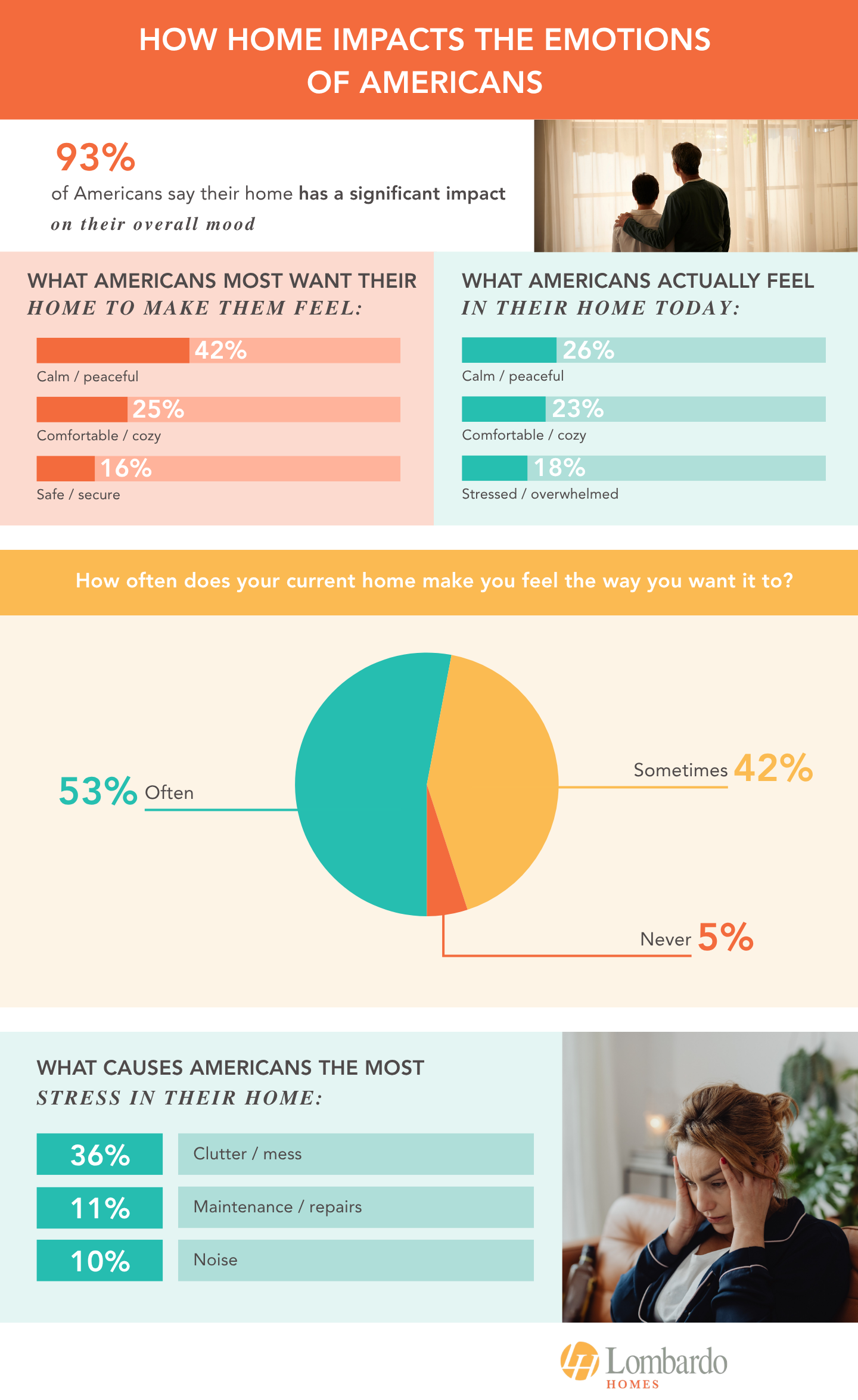
Then I was given the opportunity to look at a nationwide study from Lombardo Homes examining the emotional impact our homes can have on us. The study looks at the spaces and features that make Americans feel happier, calmer, more comfortable, and more connected — along with the things that can make home life feel stressful or overwhelming.
And one part of the study immediately caught my attention. Clutter. Yep. Clutter. As we moved from a 3 bedroom 2 bath mobile home into a 2 bedroom 1 1/2 bath sometimes it isn’t more space we need
According to the Lombardo Homes study, 59% of Americans say clutter-free spaces have a positive impact on their mood. Even more interesting, 17% named a clutter-free space as the single feature having the greatest impact on their mood.
And 27% said less clutter or more storage is the number-one thing they would change about their home to improve their mood. I understand that one.
Sometimes I look around my home and think, “Where did all this stuff come from?” It doesn’t necessarily mean the house is dirty. It doesn’t mean we don’t love our home.
Sometimes it simply means that life happened. Mail came in. Things got set down. A project was started. Something needed to be moved and never quite made it to its final destination.
And suddenly the kitchen counter has become the place where everything in the house seems to land. That is when I think there is a difference between having a lived-in home and having a home that feels overwhelming.
One thing I learned was a peaceful home doesn’t have to be perfect. The Lombardo Homes research found that Americans most want their homes to feel calm and peaceful.
I can relate to that. I don’t think most of us are looking for a magazine-perfect house where nobody is allowed to actually live. They want a home where people can sit down.
They want a place where people can laugh. They want a kitchen where somebody can make something without worrying about making a mess.
They want comfortable places to sit and read. They want spaces where family members can have some quiet when they need it. And they want the things we use regularly to have somewhere practical to go. That last one might be the key.
In our home storage isn’t just about storage which is one of the points Melissa Cervin, Vice President of Marketing for Lombardo Homes, discussed the study that really stood out to me.
She explained that storage shouldn’t simply be treated as leftover space. That makes sense. A closet isn’t particularly helpful if it is too small, awkwardly located, or difficult to organize.
The same goes for kitchen cabinets, bathroom storage, drop zones, pantries, linen storage, and all those little places where everyday life happens. Sometimes better organization isn’t about owning less.
Sometimes it is about having a logical place for the things you actually use. And according to Cervin, thoughtful storage can help a home feel more organized and peaceful without necessarily making the home itself larger.
I think that is an important distinction. We don’t always need more house. Sometimes we need more useful space within the house we already have. Which I wish was true but here it isn’t.
Most of us would like a comfortable home. If yu asked The Lombardo Homes in there study they also found that 75% of Americans say comfortable furniture has a positive impact on their mood.
Natural light followed at 70%, while comfortable bedrooms were identified by 63%. Those findings don’t surprise me. Now, I have a question for you. Did they surprise you?
For me there is something wonderful about coming home and having a comfortable place to sit and natural light can completely change the feeling of a room.
And a bedroom should feel like somewhere you can actually rest. These aren’t necessarily extravagant things. They are everyday comforts. We all deserve.
And that may be one of the more interesting things about the study. According to Cervin, designing for emotional well-being doesn’t necessarily require expensive technology or a dedicated wellness room.
Sometimes it is natural light. Useful storage. Outdoor views. Flexible spaces. And a floor plan that makes sense for the people who actually live there. Which our floor plan doesn’t. Does yours?
Everyone needs a little space of there own and one statistic from the Lombardo Homes study really surprised me. Ninety-six percent of Americans say having a private space where they can be completely alone at home is important to them, including 74% who say it is very important.
I think families sometimes forget this. We love our people. We want to spend time together. But loving your family doesn’t mean you never need five minutes by yourself.
Sometimes you need a quiet chair. Sometimes you need a bedroom with the door closed. Sometimes you need to sit outside. Sometimes you simply need a little corner where nobody is asking you a question.
The study found that 54% of Americans say an equal balance of private and shared space is important to them. That sounds pretty reasonable to me. Families need places to gather and they also need places to retreat.
Homes can change as families change which is another finding from Lombardo Homes that caught my attention: because 42% of Americans say they prioritize comfort and relaxation more at home now than they used to, while 20% now place greater importance on privacy and quiet.
I think our homes change right along with us. What worked when the kids were little may not be what works when they’re older. The way a family uses a living room changes. Bedrooms change. Work spaces change. Hobbies change.
And sometimes the best thing we can do isn’t completely redesign the house. It is simply asking: What do we need from our home now? That’s a question worth asking every so often.
A lot of people already spend money trying to feel happier at home. It was fun to find out The Lombardo Homes study found that 62% of Americans have already renovated, decorated, or paid more for something in their home specifically because they believed it would make them happier.
I can understand that, too. On a comfortable chair or better mattress. Or a table that actually fits the space. Ot they might create a little outdoor area. Or add vetter lighting. Or find storage that finally solves an everyday problem.
None of those things necessarily sound like emotional-well-being purchases when you first think about them. But if something makes everyday life easier or more comfortable, that can matter.
The study also found that Americans say they would pay an average of $58,020 above their existing home-buying budget for a home designed to improve their emotional well-being.
That’s a pretty significant number. It suggests that when people think about their homes, they aren’t necessarily thinking only about bedrooms, square footage, and finishes. They are also thinking about how they want to feel when they are home.
Now, I have a question for you: How does your home make you feel? That may be my favorite question to come out of the Lombardo Homes study. Not: How many square feet do you have?
Not: How many bedrooms? Not: How new is your kitchen? But: How does your home make you feel? Does it feel peaceful? Comfortable? Welcoming? Crowded? Chaotic? Safe? Or lived in?
Do you have somewhere to sit quietly? Do you have enough storage for the way your family actually lives? Do you have natural light? Do you have a comfortable place to gather together?
And perhaps most importantly: Does your home work for the people who live there right now? Because homes aren’t supposed to be perfect. They are supposed to be lived in.
For me, a home is where family happens. It is where memories are made, where ordinary days become stories, and where we can hopefully find a little peace when the world outside gets noisy.
Maybe creating that feeling doesn’t require a perfect house. Maybe it starts with something as simple as clearing one counter, finding a place for something that has been sitting out, opening the curtains, sitting down with a cup of coffee, or creating one little corner where you can breathe.
And maybe that is one of the biggest takeaways from the Lombardo Homes emotional well-being study: sometimes the things that make our homes feel better are also some of the simplest.
What makes your home feel peaceful to you? I’d love to hear what you think.
About the Lombardo Homes Study
The statistics and research findings discussed in this article come from a nationwide study commissioned by Lombardo Homes examining how Americans’ homes influence their emotional well-being, including the spaces, features, layouts, and home improvements people associate with feeling happier, calmer, and more connected.
Lombardo Homes also provided GreatfulMoments.com with infographic images from the study for editorial use.
For the complete findings, readers can visit the full Lombardo Homes report:
https://lombardohomes.com/blog/the-emotional-impact-of-home-survey
Source: Lombardo Homes, The Emotional Impact of Home Survey.
 Glenda |
  David |
  Charlie |
  Suzanne
Grateful, Thankful, and Blessed.
GreatfulMoments.com